

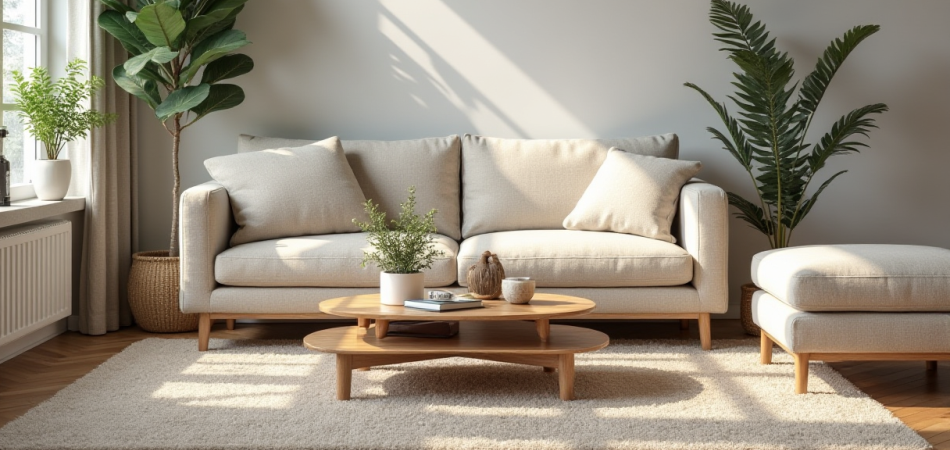
 Human beings are spending more time indoors than ever – up to 90% of our days, in fact. The biggest problem with this is that the spaces we inhabit trap a noxious blend of volatile organic compounds (VOCs). These invisible, often undetectable chemicals impact our long-term respiratory health, meaning that the very air we breathe is unhealthy. Some homeowners solve this problem with mechanical air purifiers. While these devices are perfectly effective, International Wool Textile Organisation has long promoted an equally effective, but more elegant, decorative, passive and perfectly natural alternative: wool.
Natural Wool Air Filtration
Wool truly is a miracle fibre. Not only is it beautiful, breathable, versatile, and fully biodegradable. It’s also a fully functional biofilter that permanently neutralizes harmful pollutants like formaldehyde and nitrogen dioxide. It naturally performs a process called chemosorption, actively scrubbing the air and creating a purified breathing zone that protects us while we live and work.
Read Next: 5 Surprising Places You’ll Find Wool in 2026
Scientific Evidence of Natural Chemosorption
The claim that woollen furniture, bedding and carpets can do what air purifiers do – naturally and passively – may seem a doubtful one. However, it is a claim that is borne out by scientific research.
In a test carried out by AgResearch in New Zealand, wool carpets were conclusively proven to reduce high levels of formaldehyde (a VOC commonly found in furniture) to zero in just four hours. Moreover, it has been shown that wool absorbs chemicals permanently. Synthetic fibres like nylon do absorb some chemicals, but they often re-emit them over time, especially as temperatures change. In contrast, wool chemically binds VOCs and never re-emits them. Further studies have found that wool’s natural air purification effect lasts for up to 30 years.
Another Way That Wool Contributes to Human Health and Comfort
For centuries, we have used wool to keep us warm and comfortable. Now, it is apparent that our favourite natural fibre is more versatile and potent than we thought.
Indoor air quality affects our lives whether we know it or not. Exposure to indoor air pollutants can have serious health consequences. The effects of exposure to air that is polluted with VOCs range from mild irritation of the eyes, nose and throat to serious respiratory issues, as well as liver and kidney damage. All too often, people experience these conditions without having any idea that they were caused by the air they breathe. Wool provides a simple, effortless solution. By using pure wool in our interior decorating, we get the benefits of passive, natural air purification. We can enjoy cleaner air without giving it any further thought, while wool does all the work.
Learn More About the World’s Wool
For more information on the wool industry around the world, take a look at our fact sheets, statistics and guidelines.
Join the Conversation. The Wool Interiors Working Group continues to monitor and contribute to the latest research in air purification and sleep science. We invite IWTO members to join our upcoming sessions to stay at the forefront of these developments. Not a member yet? Learn more about joining the IWTO community and help us shape the future of wool in the global wellness market.
Now Read: IWTO Welcomes ZDHC Foundation
TECHNICAL GUIDE
Why and how is wool such an effective air cleaner? Consider the scientific factors that make chemosorption possible:
- Keratin: This complex protein is the primary component in wool. It contains 18 amino acids, over 60% of which have reactive side chains that like chemical hooks.
- Irreversible Bonding: Pollutants like formaldehyde and nitrogen dioxide come into contact with these hooks, and are instantly and irreversibly bonded to them, meaning they are permanently removed from the air.
- Lock and Key Effect: Once these gases are bonded to the wool, they are chemically altered. They can’t be re-released into the air, even if the wool is heated by sunlight or underfloor heating.
- 30-Year Performance: This effect lasts for up to 30 years, making wool one of the most sustainable air-filtration systems available.

Whether we're publishing peer-reviewed research on wool's environmental benefits, setting international wool trading standards, or sharing stories about cutting-edge wool innovations, our mission is simple: making sure people understand why wool is such an extraordinary fibre.
IWTO posts reflect our collective expertise and passion for all things wool, backed by nearly a century of industry knowledge and a global network of wool professionals.
- Zen-phyr: Making Merino Wool Feel Weightless - October 5, 2026
- Canadian Wool Conversations 2026: Regenerating Canada’s Wool Industry - October 1, 2026
- Comfort, Health and Rest: Wool’s Role in Wellness - September 17, 2026